1
Environmental-rights language appears in multiple constitutional families, including Latin American, European, Lusophone, and Nordic texts.
A global semantic map of constitutional law
Use semantic search to find constitutional provisions about environmental rights, due process, dignity, and institutional design across different drafting traditions.
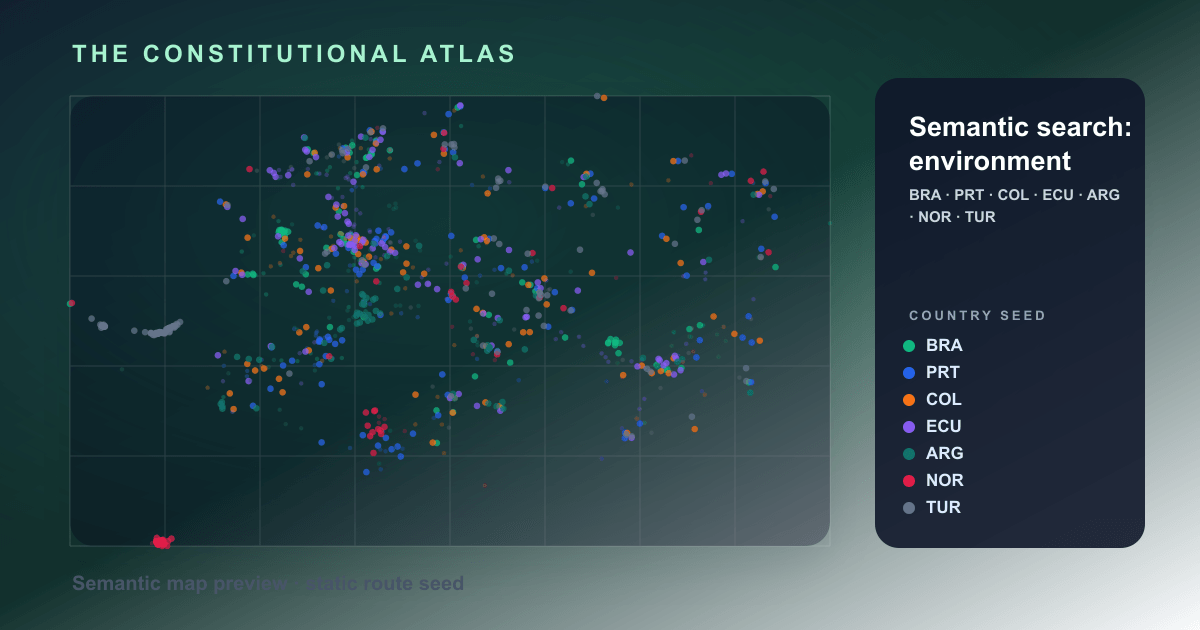
Semantic search
A meaning-based query can connect provisions that describe the same constitutional problem with different vocabulary. That is especially useful for rights such as a healthy environment, due process, and dignity.
Research context
The example query opens a small set of countries with visible environmental-rights language and then colors the results by global cluster.
This is useful for cold research traffic because the user starts from a concrete question, not from a blank map.
Three findings to test
Environmental-rights language appears in multiple constitutional families, including Latin American, European, Lusophone, and Nordic texts.
Some constitutions frame the topic as an individual right; others pair it with duties of the state, citizens, or public authorities.
Semantic search helps expose neighboring provisions about health, natural resources, public policy, and intergenerational protection.
Method note
Semantic retrieval broadens the candidate set. The final claim should be checked by reading the full provision and, where needed, the constitutional amendment or doctrinal history.